Data Security for Apps & Websites: Best Practices to Protect Your Customers
A single breach can destroy customer trust and your reputation. Learn the essential data-security practices every app and website must follow.
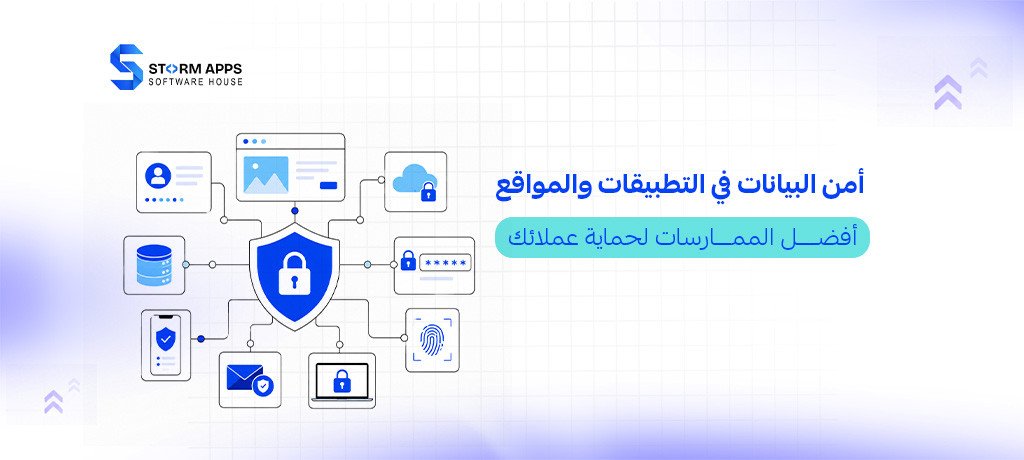
In short: data security is not an add-on but the foundation of any successful digital product. Protecting customer data shields you from breaches and legal penalties (like Saudi Arabia's PDPL) and builds lasting trust, while a single breach can cost you your reputation and customers all at once.
With cyberattacks rising and data growing more valuable, information security is now a core responsibility for anyone building an app or website that handles user data. The good news is that most breaches are preventable by applying known, systematic practices.
Essential data-security practices
- Encryption: encrypt data in transit (HTTPS/TLS) and at rest, so even if it leaks it stays unreadable.
- Strong authentication: require strong passwords and enable two-factor authentication (2FA) for sensitive accounts.
- Least privilege: no user or employee accesses data they don't need for their job.
- Continuous updates: patch vulnerabilities in libraries, servers, and operating systems promptly.
- Backups: regular, tested backups that guarantee recovery when needed.
- Monitoring & alerting: detect suspicious activity and respond to incidents fast.
- API protection: secure your programmatic endpoints against abuse and unauthorized access.
Common mistakes that open the door to breaches
- Storing passwords as plain text instead of hashing them.
- Leaving API keys or credentials inside published code.
- Neglecting to update old libraries with known vulnerabilities.
- Not validating user input, opening injection vulnerabilities.
Security and compliance are two sides of one coin
Data security is the core of PDPL compliance. A secure system is usually a compliant one, and vice versa. Investing in security achieves both goals: protecting customers and avoiding legal liability.
Build security in from the start (security by design)
Adding security after building the system is costly, ineffective, and often leaves gaps. Real security starts at design: choosing a secure architecture, reviewing code, and penetration testing before launch.
Storm Apps builds secure apps and websites aligned with data-security best practices and PDPL. Contact us to review your system's security and protect your customers' data.