The MVP Methodology Explained: Build a Successful Product With Minimum Risk
What is an MVP and why do smart founders start with one? The methodology explained, plus the steps to build a prototype that tests your idea before you spend the whole budget.
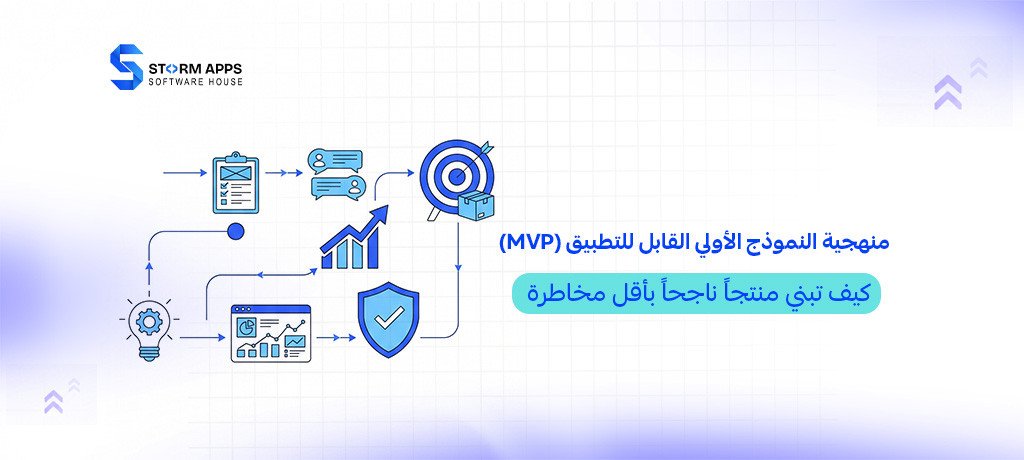
In short: a Minimum Viable Product (MVP) is the simplest version of your product that delivers the core value and can be launched quickly to test the idea with real users before full investment. It is a methodology that reduces risk and directs your budget toward what the market actually wants.
Many projects fail because they spend months and large budgets building a full product before confirming real demand exists. The MVP methodology flips the equation: launch first, learn from users, then build based on data, not assumptions.
What exactly is an MVP?
An MVP is not an incomplete or low-quality product; it is a focused product that solves one core problem exceptionally well. The idea is to ship the minimum set of features sufficient for users to find real value — and pay or engage — so you learn at the lowest cost.
Why do smart founders start with an MVP?
- Lower financial risk: test demand before spending the whole budget on features nobody may want.
- Speed to market: launch in weeks, not months, and get ahead of competitors.
- Data-driven decisions: build on real user behavior, not guesses.
- Attracting investors: a working product with real users is far stronger than a pitch deck.
Steps to build an MVP
- Define the problem: what real problem does your product solve, and for whom?
- Pick the core feature: which single feature delivers the essence of the value? Defer the rest.
- Design a simple experience: a clear interface that reduces friction and gets the user to their goal fast.
- Launch to a limited segment: start with a small group and watch how they actually use it.
- Measure and learn: track metrics like sign-ups, retention, and conversion.
- Improve and expand: add the features users actually request.
Common mistakes to avoid
- Stuffing the MVP with too many features defeats its purpose and delays launch.
- Ignoring experience quality because "it's just a prototype" — a poor experience drives users away.
- Not measuring data, which wastes the whole point of an MVP.
The MVP in the Saudi market
With a mature digital environment and a tech-adopting audience, the Saudi market is ideal for testing ideas quickly. Start small, validate demand, then scale with confidence.
Storm Apps builds fast, scalable MVPs for founders in Saudi Arabia — from idea definition to launch and measurement. Contact us to turn your idea into a testable product.